Scroll Percentage: 0%
Partner Projects: Dolphin Energy
Dolphin Energy and MBZ Fund Join Forces to Safeguard Endangered Species
In 2024, The Mohamed bin Zayed Species Conservation Fund embarked on a journey with Dolphin Energy, to protect endangered species worldwide. The US $100,000 commitment per year for three years will bolster the Chairman's Award within the Mohamed bin Zayed Species Conservation Fund Small Grants Programme and support endangered flora and fauna in the process. As a responsible corporate entity, Dolphin Energy acknowledges the significance of partnering with the UAE's premier external conservation agency to address biodiversity loss.
The Fund supported four Dolphin Energy grants in 2024.
Use the menu below to scroll to a grant:
As critical as addressing climate change is the issue of nature loss. It is essential we adopt a 'nature positive' approach and do all we can to contribute to the protection and restoration of our planet's species, habitats and ecosystems. Supporting the Fund to boost the Chairman's Award will help do that and we are delighted to be involved.
Mr Obaid Abdulla Al Dhaheri
CEO, Dolphin Energy Limited
THE BERMUDA CAHOW
(Pterodroma cahow)
The landscape
Nonsuch Island is part of Bermuda’s stunning chain of islands, located in St. George’s Parish in the northeast. Covering an area of 5.7 hectares, it sits at the eastern entrance of Castle Harbour, near the southeastern tip of Cooper’s Island.
This island is home to the renowned Nonsuch Island Nature Reserve, which has been engaged in a successful rewilding project for over 65 years, in order to restore its flora and fauna to a state reminiscent of pre-colonization.
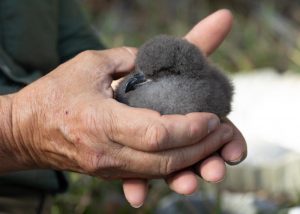
It is home to several critically endangered and Lazarus species, and thanks to a pioneering Recovery Program started in the 1960’s and follow-on Translocation Project in the early 2000’s, one of the rarest seabirds on the Planet, the “Cahow” has been brought back from 17 to 165 pairs, after 300+ years being considered extinct.
Our conservation partner
For the past 17 years, Nonsuch Expeditions has supported and showcased the Department of Environment and Natural Resources (DENR) conservation efforts on and around Nonsuch Island, Bermuda. Their work with the critically endangered Bermuda Petrel, or Cahow, is especially remarkable. Once thought extinct for over 330 years, the Cahow was rediscovered in the 1950s with just 17 pairs. Thanks to Dr David Wingate and Jeremy Madeiros, the population has grown to 165 pairs.
With support from the MBZF and Dolphin Energy, Nonsuch Expeditions founder JP Rouja works directly with Warden Jeremy Madeiros to safeguard this unique species.
His CahowCam project lets people worldwide watch Cahow nesting activities via livestreaming cameras in underground burrows. This initiative not only educates the public but also enhances scientific understanding through continuous observation and data collection.
Conservation objectives
With additional funding from Dolphin Energy, Nonsuch Expeditions will enhance and expedite their efforts through several key initiatives. These include increasing the number of artificial nesting burrows, implementing global livestreaming for effective monitoring of these burrows and rodent detection, and carrying out targeted rodent detection and eradication. Population genomics will also be utilized to identify inbreeding risks and inform management strategies. A big part of the project is outreach and education campaigns to raise awareness and engage the community in conservation efforts.


THE VOLCANO AXOLOTL
(Ambystoma leorae)
The landscape
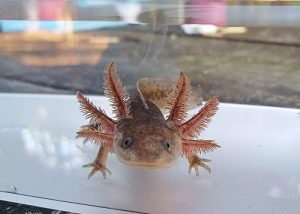
This project is situated in the Trans-Mexican Volcanic Belt, specifically in the northern part of the Sierra Nevada volcanic field. This mountain range encircles Mexico City to the east, one of the largest megacities in the world, housing over 24 million residents. The Sierra Nevada is composed of five prominent volcanoes, including the second and third highest in Mexico. This region is particularly important as it serves as the sole known habitat for the critically endangered Volcano axolotl (Ambystoma leoraei). The species has a limited range of just 10 km² and exists in a single, threat-defined location. Unfortunately, the habitat of the Volcano axolotl is facing ongoing decline in both extent and quality in central Mexico.
Our conservation partner
The grant recipient, Dr. Felipe Osuna from the Colegio de la Frontera Sur, a public scientific research center, is currently in a postdoctoral position. This project will significantly support him in achieving his goals while allowing him to implement a range of innovative and community-focused conservation actions for the Volcano axolotl.
Conservation objectives
The Volcano axolotl (Ambystoma leoraei) is critically endangered, existing in only two streams worldwide, with fewer than 500 individuals remaining. Conservation efforts to ensure their survival focus on several key objectives: providing environmental education to children living alongside the axolotls, disseminating scientific information to neighbouring communities and the broader public, managing and restoring their natural streams, and implementing ex situ management strategies to help increase the species' population size and distribution.


FLOWERS OF HOPE
The landscape
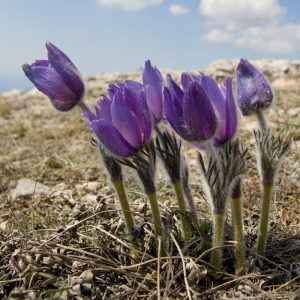
This project is committed to the conservation of endemic and threatened iris species in Lebanon and has the potential to make a significant impact across the entire nation. The irises of Lebanon are renowned for their impressive altitudinal range, which causes each species to thrive in specific, often isolated, habitats. Unfortunately, the project’s start date has been delayed due to ongoing conflict that poses a threat to the entire iris population.
Our conservation partner
BCI is a social company established in 2022 that offers consultancy and advisory services for local NGO’s, Universities, Organizations and Companies to help them better explore, understand, conserve and communicate their biological resources. BCI’s services are strategically organized around species, habitats, ecosystems and society. Its main mission is to serve as a hub for providing scientific-based evidence to enhance conservation, the integrity of protected areas, and increase resilience to global change across different ecosystems.
Conservation objectives
The populations of irises in Lebanon display non-overlapping distributions, thriving in distinct environmental conditions and exhibiting unique diagnostic traits. Urgent action is needed, as this region is home to 55% of all endangered species within the Iris genus, according to a 2000 IUCN report. This project aims to establish new micro-reserves for Iris cedretii and Iris westii, implement a circum-situ conservation approach for Iris antilibanotica at the Anjar archaeological site, and utilize both in-situ and ex-situ conservation strategies for various iris species.


THE SIAMESE CROCODILE PROJECT
(Crocodylus siamensis)
The landscape
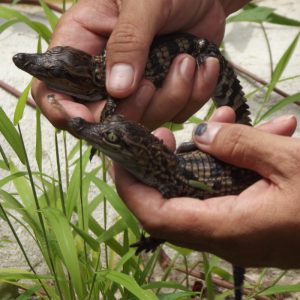
The Xe Champhone Wetland is the largest of Lao PDR’s two Ramsar sites and contains core habitat for one of the largest breeding populations of Siamese Crocodiles in the wild, anywhere in the world. The Wildlife Conservation Society had identified this population as vital to the conservation of the Siamese Crocodile already in 2010. At that time, without the threat of land conversion as we are seeing these days, it was felt it was enough to work on boosting the population through a head-starting program, implemented together with local communities.
Conservation partner
WCS was established in 1895 and works all over the world. We are committed to conserving wildlife in wild places for the long term and are very strong in building up a new generation of conservationists wherever we work. WCS began working in Lao PDR in the 1980s, surveying wildlife and habitats around the country to assist the government to create Lao PDR’s national protected area system. In the early 1990s, WCS documented wildlife and habitats in many of the newly created national protected areas and began supporting the government to train protected area managers, as well as raise awareness about illegal wildlife trade. WCS established a country office in Lao PDR in 1994. Our vision at the Lao PDR Program is that the unique ecosystems of Lao PDR thrive indefinitely and are valued by the people of Lao PDR, and the world, for their biodiversity, natural beauty, and the services they provide to humanity. A core theme is the protection and improved management of biodiversity values by building the capacity of government and local stakeholders, improving management of wildlife and wild places through community engagement, and combatting illegal wildlife trade.
Conservation objective
The Siamese crocodile (Crocodylus siamensis) was once widespread across much of Southeast Asia, but its populations have drastically declined, leaving only a few at-risk groups in the Cardamom Mountains (Cambodia), Xe Champhone Wetlands (Laos), and Lake Mesangat (Kalimantan, Indonesia). Additional small, scattered, and non-viable populations can still be found in Cambodia, Laos, Thailand, and Vietnam. Through this project, we aim to protect the remaining wetlands and known nesting areas over the coming year while advocating for legal protections for these vital habitats. Our efforts will also focus on boosting the crocodile population by collecting and incubating eggs, head-starting hatchlings, and translocating juveniles into the wild. We will survey the broader floodplain for nests and work to protect as many as possible, collaborating with local communities to safeguard the crocodiles, their nests, and the surrounding wetlands.


