Scroll Percentage: 0%
Partner Porject: The Global Environment Facility (GEF)
MBZ Fund partners with Global Environment Facility to empower young conservationists
In 2024, The Mohamed bin Zayed Species Conservation Fund (MBZ Fund) announced the launch of the Global Field Grants as part of the Fonseca Leadership Program, supported by the Global Environment Facility (GEF). With a $1.5 million commitment over three years, this partnership aims to empower young conservationists worldwide, providing essential financial support for both current and future researchers and practitioners in the field.
The GEF is a multilateral family of funds dedicated to confronting biodiversity loss, climate change, and pollution, and supporting land and ocean health. Its financing enables developing countries to address complex challenges and work towards international environmental goals. In 2023, GEF initiated the Gustavo Fonseca Youth Leadership Program to commemorate the late GEF Director of Programs, Gustavo Fonseca.
The Fonseca Leadership Program aims to cultivate a pipeline of young professionals in GEF countries, and by offering conservation fellowships, grants for biodiversity fieldwork, awards for participation in international conservation events, and a recurring global conservation symposium that unites young environmental leaders.
The Fund supported 59 emerging conservationists in 2024.
Use the menu below to scroll to a few select testimonials:
This partnership aims to empower young people from developing countries, amplifying their voices and enhancing their participation in environmental research and policy. The GEF is dedicated to investing in the next generation, who will play pivotal roles in environmental governance and stewardship
Carlos Manuel Rodríguez
CEO and Chairperson of the GEF
CASE STUDY 1
Grant Recipient
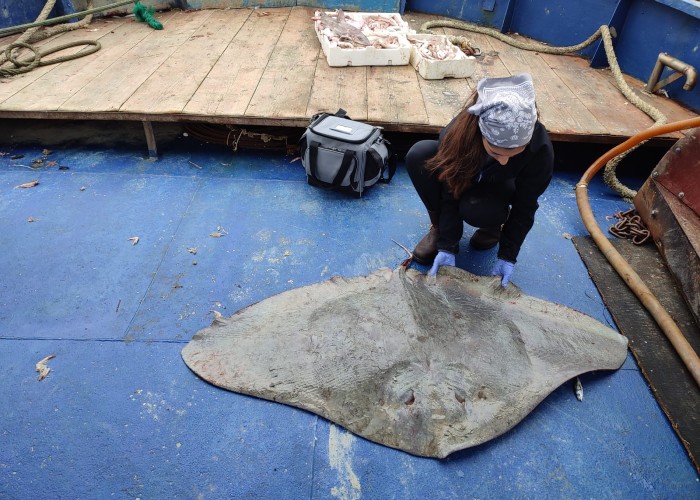
Emina Karalic is a conservationist from Albania who currently works with Sharklab ADRIA: Center for Marine and Freshwater Biology. Transitioning from her career as a nurse to a biologist, Emina is dedicated to her project, which focuses on understanding the boundaries and key habitats of the Spiny Butterfly Ray in the neighboring regions of Montenegro, Bosnia and Herzegovina, and Croatia.
The Project
The spiny butterfly ray (Gymnura altavela) is a critically endangered batoid with a distinctive body shape, which is twice as wide as long. Its Mediterranean populations have declined by over 80% in the past two decades, and due to the lack of MEDITS surveys, some suggested complete absence of the species in much of the northern Mediterranean Sea.
However, recent findings, including the discovery of a gravid female in Albania, have shed new light. Emina Karalić and her team made five novel discoveries between 2022 and 2023, emphasizing the urgency for conservation actions and enhanced monitoring efforts. The presence of gravid females and juveniles in Vlorë suggests it may serve as a vital nursery ground, highlighting the need to protect these habitats threatened by illegal fishing, habitat loss, pollution, and disturbance.
Spiny Butterfly Ray
Gymnura altavela
Endangered
Europe
Albania
$18,720
Receiving the Fonseca grant has been instrumental in continuing my research and conservation efforts on the critically endangered Spiny Butterfly Ray in the Adriatic Sea. As a young conservationist, this grant has provided me with both the resources and confidence to lead groundbreaking research and rediscovery efforts for a species that hadn't been recorded in this century across six countries. I am certain that the grant will also enable us to implement critical conservation measures aimed at ensuring the survival of this ray, contributing to both scientific understanding and regional marine biodiversity.
Emina Karalic


CASE STUDY 2
Grant recipient
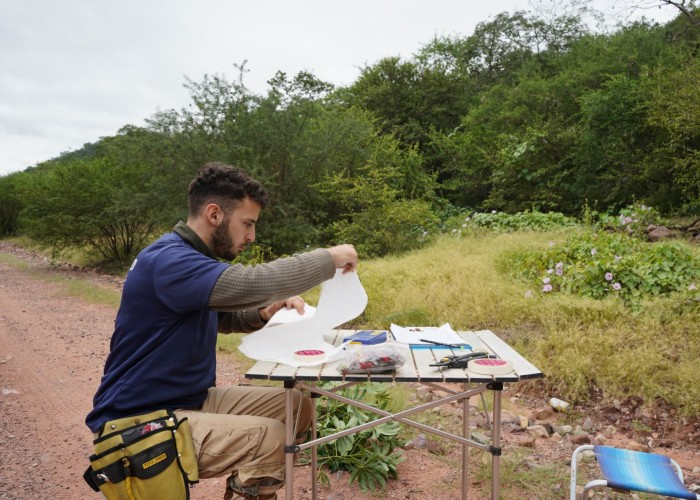
Axel Gualdoni-Becerra is an Argentine PhD student currently pursuing his studies at the University of Göttingen in Germany. His research aims to explore the role of fragmentation processes and edge influences on plant community assembly, investigate how various aspects of biodiversity affect the functioning of disturbed ecosystems, and analyze how these disturbances impact remote sensing indices, specifically focusing on the endangered “paper tree” (Cochlospermum tetraporum).
The Project
The endangered “paper tree” (Cochlospermum tetraporum) is the poster child of the Dry Chaco Forest, which spans Argentina, Bolivia, and Paraguay. Sadly, this idol is vanishing rapidly, with 9.5 million hectares of the forest lost in Argentina alone since 2000.
Step in Axel Gualdoni-Becerra and his team who are looking to make a huge difference. To kick off this conservation campaign, they travelled over 400 km across northern Argentina to survey and protect this vital ecosystem. By combining fieldwork with cutting-edge technology, they aim to map biodiversity and identify key areas for conservation.
Protecting the paper tree means safeguarding the entire Dry Chaco ecosystem for future generations.
Paper tree
Cochlospermum tetraporum
Vulnerable
South America
Argentina
$24,700
Being awarded the Fonseca Field Grant from the Mohammed bin Zayed Species Conservation Fund was a turning point in my career. It allowed me to successfully carry out my PhD fieldwork in the Dry Chaco Forest, collecting an extensive dataset on woody plant species diversity, functional traits, biomass, soil, vertical structure and high-resolution multispectral imagery. This support not only made my research possible but also laid the foundation for my future as a conservationist working in one of the most threatened ecosystems in South America. With Cochlospermum tetraporum (the Paper tree) as a flagship species, this grant has enabled me to advance both my scientific career and the conservation of the Chaco's unique biodiversity.
Axel Gualdoni-Becerra


CASE STUDY 3
The Recipient
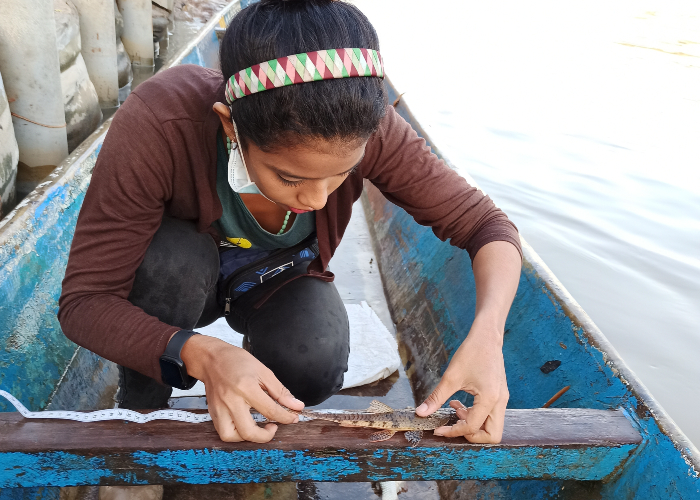
Mailuet López, a female engineer and researcher with the Association of Fishermen, Marketers, and Environmentalist Farmers La Doncella in Colombia, is leading to a project that aims to share experiences, generate knowledge, and promote ideas for sustainable social, environmental, and economic development within local communities. Her work focuses on enhancing the quality of life for residents through innovative and sustainable practices.
The Project
The project is vital for maintaining the ecological balance and resilience of aquatic ecosystems. Conserving migratory fish in the binational Arauca River, particularly those classified as threatened, represents a strategic initiative that embraces the region’s natural and cultural wealth. By protecting these fish, we are also preserving the identity and traditions of the communities that rely on the Arauca River and its resources. The project will be implemented in the binational waters of the Arauca River, which flows between Colombia and Venezuela, specifically in the Arauca Department and Apure State. The target species for this project are listed as Endangered (EN) and Vulnerable (VU) on the IUCN Red List.
Bighead striped catfish
Pseudoplatystoma orinocoense
Endangared
South America
Colombia
$25,000
Thanks to a grant from the Mohamed bin Zayed Species Conservation Fund through the Gustavo Fonseca Youth Leadership Program, I was able to develop this project to conserve migratory fish in the river Arauca binational, with special emphasis on those species that are under threat, which has contributed significantly to knowledge about biodiversity and the sustainability of fisheries in the region. This gave me the opportunity to grow personally and professionally by working on what I am passionate about and fighting for those who do not have a voice, such as our fish, where I can now inspire other young people to be leaders in the field of research, conservation and protection of aquatic fauna.
Mailuet López


CASE STUDY 4
Grant recipient
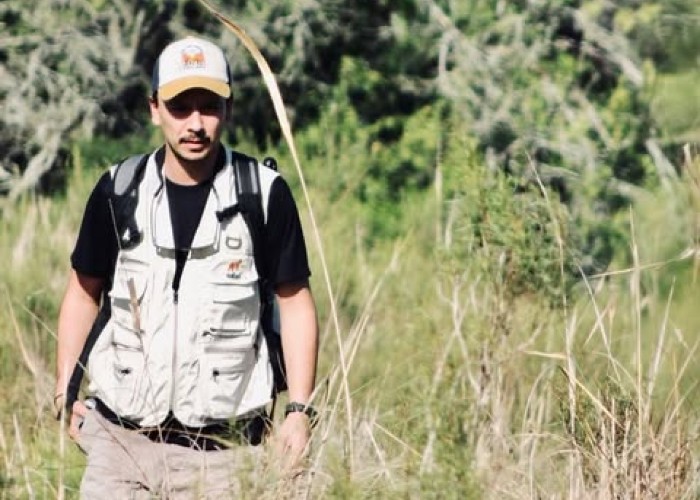
Santiago Turcatti Oviedo is a Zoologist (Mastozoologist specialist) and hails from Urugay. He works for the Pampas Working Group as the general coordinator, researcher and planner on the critically endangered Pampa cat (Leopardus munoai). Uruguay, while considered a developing country, demonstrates a strong commitment to conservation, particularly in its agricultural sector and through the establishment of protected areas.
The project
The project will take place in Uruguay’s savannah ecoregion along the border with Brazil. During the last project, they recorded the Pampas cat seven times, marking the first live sightings in Uruguay in over ten years. This elusive species, previously known to most, is now on our radar, but they still need more resources to continue their efforts. Santiago Oviedo and his team are leading vital initiatives to protect the pampas cat, the most endangered small wild cat in the Western Hemisphere. The project made a significant breakthrough by documenting the species with camera traps, resulting in eight records, four live and four deceased, through monthly monitoring of key roadways.
Beyond the pampas cat, the project has raised awareness of other native felines, such as Geoffroy’s cat and the margay, enriching regional biodiversity preservation. A key aspect of the mission is environmental education where they engage schools and local communities to build chicken coops which significantly reduce human-wildlife conflict. Educational signage about native felines and traffic safety was another method that proved very impactful.
Pampas cat
Leopardus munoai
Critically endangared
South America
Uruguay
$8,500
The Fonseca grant has played a crucial role in the development and success of my small wild cats conservation project. As a young and emerging conservationist, this grant has provided invaluable support, enabling me to conduct vital research, monitor wildcat populations, and implement effective conservation strategies. Additionally, the grant has allowed me to engage with local communities to raise awareness about the importance of preserving these elusive species and their habitats. Gustavo Fonseca's work and dedication to conservation have been a great source of inspiration for me. This grant not only supports my project but also honours the legacy of someone whose commitment to conservation has left an indelible mark on the field.
Santiago Turcatti Oviedo


